Modern technology features advanced semiconductor chips in mobile phones, electric cars, AI accelerators, and high-performance processors. Behind these innovations is Very Large Scale Integration (VLSI), which is expanding rapidly due to increasing chip complexity, performance demands, and global semiconductor investment. Nowadays, VLSI is no longer an exclusive preserve of a small elite; it offers well-organized learning, defined career paths, and long-term career development, not only for new graduates but also for employees.
This blog outlines a VLSI career roadmap to help you enter the field, become a specialist, and work your way to the top in technical or management roles.
Understanding the VLSI Industry and Its Career Landscape
VLSI supports sectors including consumer electronics, automotive, telecommunications, data centres, and artificial intelligence. As semiconductor nodes shrink and architectures evolve, companies need engineers with strong fundamentals and hands-on experience, offering promising growth opportunities to inspire your career ambitions.
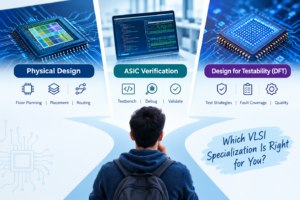
Typical career roles in the VLSI ecosystem include:
- RTL Design Engineer
- ASIC Verification Engineer
- Physical Design Engineer
- Analog/Layout Engineer
- Design for Test (DFT) Engineer
Each role serves a distinct purpose in the chip development lifecycle, making specialization a critical part of successful VLSI career opportunities.
VLSI Career Roadmap for Freshers
For engineering graduates, a VLSI career for freshers begins with foundational clarity and structured skill-building. At this stage, the focus should be on understanding how chips are designed, verified, and manufactured.
Freshers should first strengthen:
- Digital electronics and semiconductor fundamentals
- HDL programming using Verilog and SystemVerilog
- Basic Linux, scripting, and problem-solving skills
- Preparing for entry-level roles that introduce you to VLSI career options in India
Once the basics are in place, selecting a job-oriented specialization becomes essential. Hands-on labs, tool exposure, internships, and real-world projects help bridge the gap between academic learning and industry expectations. Entry-level roles often serve as gateways to long-term specializations, making early choices crucial for sustained growth.

VLSI Career Path for Working Professionals
Professionals from electronics, embedded systems, or IT backgrounds can transition into VLSI through targeted upskilling rather than restarting their careers. Prior experience in programming, debugging, or system-level thinking often accelerates learning. Professionals frequently leverage their domain knowledge and use a targeted VLSI engineering career guide to enhance their roles.
The recommended roadmap for professionals includes:
- One should identify transferable skills from their current roles.
- Choosing advanced specializations such as ASIC verification, physical design, or FinFET-based technologies
- Gaining exposure to industry workflows, standards, and EDA tools
For many engineers, VLSI careers offer faster progression, greater technical responsibility, and involvement in cutting-edge semiconductor projects across global teams.
Career Growth, Roles, and Long-Term Opportunities
After you have experience, VLSI career opportunities open up to you. Engineers will be promoted to senior design leaders, architects, or technical managers. Semiconductor hubs within multinational and start-up companies in India offer multiple VLSI career options, fostering a robust ecosystem.
In the long run, the future scope of VLSI engineering allows professionals to:
- Lead Design or Verification Engineer
- Chip Architect
- Technical Manager or Project Lead
The emerging semiconductor ecosystem in India, supported by multinational companies and start-ups, offers strong career prospects and opportunities for internationalisation. Professionals can later transition to research, advanced architecture development, or strategic leadership, making a career in VLSI sustainable over time.
Building the Right Foundation with Expert Guidance
Whether you are a fresher or a working professional, success in VLSI depends on industry-aligned training, mentorship, and practical exposure. Takshila VLSI courses and training focus on job-oriented programs, real-time projects, and placement-focused learning models designed to align skills with current industry needs. With structured guidance and hands-on training, learners can follow a clear path to success.
Conclusion
Only a planned approach to VLSI can provide it with depth, long-term relevance, and opportunities worldwide. The semiconductor industry offers rewarding careers for freshers and professionals, with foundational training, specialized training, and industry-specific knowledge gained through education. VLSI is among the brightest engineering careers today, with the appropriate guidance and effort.