The semiconductor sector is more dynamic than ever, and it is no longer possible to rely on a degree alone to stand out. If you want to work on advanced chips powering AI, automotive platforms, and high-performance electronics, you must focus on building the right VLSI engineering skills. Today’s employers look for engineers who combine strong fundamentals with hands-on, industry-ready expertise. This blog breaks down the top VLSI engineer skills, explains why they matter, and shows how developing them can help you succeed in a competitive VLSI ecosystem.
Core Technical Foundation Every VLSI Engineer Needs
A strong technical foundation is the backbone of a successful VLSI career. Core VLSI technical skills include digital electronics, semiconductor physics, timing analysis, and power optimization. These fundamentals support both design and verification roles across the chip development lifecycle.
Equally important are VLSI design skills for engineers, such as RTL coding, understanding design flows, and interpreting functional specifications. Without these basics, progressing into advanced domains becomes difficult. Early development of robust VLSI engineering skills ensures long-term adaptability as technologies evolve.
Physical Design and Layout Skills for Advanced Nodes
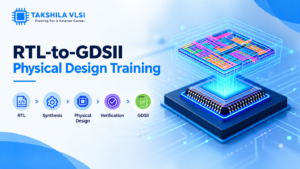
As chip complexity increases, VLSI physical design skills have become critical for achieving performance, power, and area targets. Physical design engineers work on floor planning, placement, routing, and sign-off verification.
Advanced process technologies demand FINFET layout skills, where knowledge of transistor-level constraints directly impacts yield and reliability. These competencies are among the top skills for VLSI engineers working at cutting-edge nodes. Strengthening VLSI technical capabilities in physical design opens doors to high-impact roles in leading semiconductor organizations.
ASIC Verification Skills for Functional Accuracy
As designs grow larger and more complex, ASIC verification skills have become indispensable in the VLSI industry. Verification engineers ensure that RTL designs function correctly before fabrication, preventing costly silicon re-spins.
Critical ASIC verification skills include SystemVerilog, UVM methodology, testbench development, and functional coverage analysis. Strong verification expertise complements VLSI design skills by validating functionality, performance, and corner-case behavior. For many organisations, ASIC verification is among the top skills for VLSI engineers, with strong demand and long-term career stability.
Analog and Mixed-Signal Design Competencies
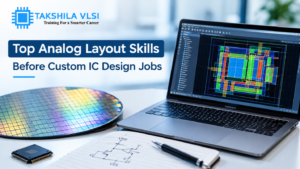
Although digital dominates modern chips, analog remains essential. Analog layout design skills are required for blocks such as amplifiers, PLLs, ADCs, and power management circuits. Engineers skilled in analog layouts understand noise coupling, matching techniques, and layout-dependent effects.
These competencies enhance overall VLSI engineer skills, especially in mixed-signal environments. Analog expertise continues to be one of the top skills for VLSI engineers, providing specialized and resilient career paths.

Continuous Learning and Industry Relevance
The semiconductor industry evolves rapidly, making continuous learning essential. Engineers must constantly update their VLSI technical skills and adapt to new tools, nodes, and methodologies. Staying relevant means refining physical design skills for VLSI, strengthening FINFET layout skills, and building strong ASIC verification skills.
Real projects, hands-on labs, and expert mentorship facilitate the transition from theory to practice. This learning mindset separates short-term success from long-term growth in VLSI careers.
Conclusion: Building Skills with the Right Guidance
Developing top-tier skills for VLSI engineers requires more than self-study. Structured education, practical exposure, and mentorship play a critical role. VLSI design skills for engineers, along with analog layout design skills and ASIC verification skills, form a strong foundation for career advancement.
Through focused training and industry-oriented mentoring, institutions like Takshila VLSI help engineers build job-ready VLSI technical skills. By following a structured learning path and continuously upgrading your expertise, you can achieve sustainable success in the VLSI industry.
FAQ
1. What skills are required to become a VLSI engineer?
A VLSI engineer needs strong knowledge of digital electronics, RTL design, verification, and semiconductor fundamentals.
2. Why are VLSI technical skills important?
Technical skills help engineers design, verify, and optimize semiconductor chips for real-world applications.
3. What are the key VLSI physical design skills?
Physical design includes floorplanning, placement, routing, timing analysis, and sign-off verification.
4. Which programming languages are used in VLSI?
VLSI engineers commonly use Verilog, SystemVerilog, and VHDL for chip design and verification.
5. What are ASIC verification skills?
ASIC verification involves SystemVerilog, UVM, testbench development, and functional verification techniques.
6. Why are analog layout skills important in VLSI?
Analog layout skills are essential for designing reliable mixed-signal circuits and semiconductor components.
7. How can I improve my VLSI engineering skills?
You can improve your skills through hands-on projects, industry tools, practical training, and continuous learning.
8. Is practical training important for VLSI engineers?
Yes, practical experience with real EDA tools and live projects helps engineers become industry-ready.
9. Who can build a career in VLSI engineering?
Engineering students, graduates, and professionals interested in semiconductor design can pursue a VLSI career.
10. How can Takshila VLSI help build VLSI skills?
Takshila VLSI offers industry-oriented training, expert mentorship, practical projects, and placement support for aspiring VLSI engineers.