The semiconductor industry is growing exponentially thanks to various advancements in fields like artificial intelligence, car electronics, 5G communication, IoT and high-performance computing. With chip complexities growing each day, the need for talented individuals to convert a circuit into a manufacturable chip has increased by many folds, thus making Physical Design one of the hottest career tracks in the semiconductor industry.
An engineering graduate or professional who is interested in getting into the chip design field can find great career opportunities by gaining the knowledge about the significance of Physical Design in VLSI.
What Is Physical Design in VLSI?
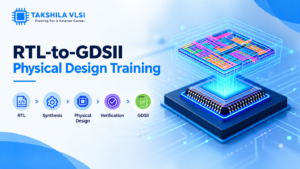
Physical Design is a process that involves taking the logical representation of the circuit design and converting it into a physical layout which can then be manufactured in silicon. Physical design acts as a bridge between front-end design and silicon manufacturing.
The various stages are:
Floorplanning, Placement, clock tree synthesis, Routing, timing analysis, power optimization, physical verification, etc. All these stages make up the whole physical design flow for VLSI and ensure the chip is ready for tape-out with all required performance, power, area specification. With increasing complexities of chips manufactured by semiconductor firms, the role of physical design engineers grows.
Why Semiconductor Companies Need Physical Design Engineers
The ever-growing demand is one of the main drivers behind it, and this is due to the fast growing semiconductor eco-system. There are various sectors, including consumer electronics, automotive, telecommunication and Data Centers which are dependent on the latest integrated circuits.
Physical Design engineers work on the performance, power and manufacturability of the chip. Chip designers, without their help, cannot take the chip to the production line.
This has generated a large amount of Physical Design jobs in semiconductor companies, design service companies, EDA tools companies, product based companies etc.
Rising Semiconductor Career Opportunities
The government and private industry are continually injecting capital into the semiconductor market. A plethora of new fabrication facilities, design centers, and research institutions are creating numerous engineering opportunities. This directly translates to solid Semiconductor career growth for people focusing in Physical Design; a market driven by engineers adept in new technology nodes, timing closure, power closure, and advanced verification techniques. Compared to other engineering fields, physical design offers longevity; there is and always will be a need for Physical Design engineers.
Skills That Make Physical Design Engineers Valuable
In this domain engineers must have adequate knowledge of Digital Electronics, Semiconductor principles and EDA tools. A good understanding of Placement, Routing, Timing analysis and Sign-off concepts will help in excelling in the Physical Design flow in VLSI.
Hands-on is also considered equally important. Employers always hire someone who has had experience on real time projects and has been through and worked with standard industry tools.
Therefore, a student enrolled in a well-known Physical Design training center would definitely stand out among the other candidates and has better prospects in this domain.
The Importance of Professional Training
Many graduates find it difficult to get their dream semiconductor job due to the gap between theoretical and practical knowledge. The need for specialized training courses, where students get practical know-how along with projects, can narrow down the gulf between theoretical and practical studies. In fact, a growing number of students and engineers prefer Online Physical Design training to enjoy the comfort of learning highly complex physical design concepts with ease and flexibility. They can get their jobs done with experienced trainers from their own study tables. Besides, colleges offering ASIC Physical Design training cover the entire process of chip implementation, which makes them job ready much faster.
Why Hyderabad and Bangalore Are Major VLSI Hubs
In India, it is already established that India is a major chip talent center where several semiconductor firms and design companies reside and this is true for cities like Hyderabad and Bangalore. An established VLSI training institute in Hyderabad can give trainees access to talented mentors, curriculum that is more aligned towards the industry and chances of placement. This training ecosystem allows trainees to link up with companies and create a career for themselves in the world of chip designing. The demand for Physical design engineers is also expected to boom due to the increase in R&D centers established by companies in India.
Conclusion
Due to increasing advancement in semiconductor technologies Physical Design jobs have been among the brightest job profiles among the fields of engineering. The increase in Physical Design jobs along with enormous growth in Semiconductor careers and indispensable importance of the Physical Design flow in VLSI have created a high demand of trained professionals in semiconductor firms. Takshila VLSI is committed to building careers of future engineers with its industry oriented training, project based learning, lab access at any time round the clock, industry expert trainers and assistance from dedicated placement assistance team. Whether you are a fresh engineer or an experienced one, joining an institute with exclusive Physical Design training with practical experience through ASIC physical design training is a great option to capitalize on growing demands for semiconductor professionals and have a booming career in VLSI design.