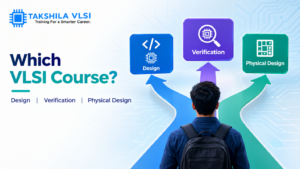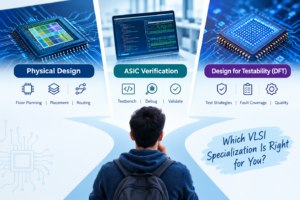
With growth in areas like AI, automotive electronics, IoT and high-performance computing, the semiconductor industry has taken a gigantic leap. As more and more complex chips are being built over time, VLSI engineers are more in demand than ever. Most engineering graduates often find it hard to land opportunities, as they don’t have industry-specific skills and experience. At this very juncture, VLSI training institutes become a pillar for freshers in shaping a successful career and high-paying semiconductor jobs.
Bridging the Gap Between Academics and Industry
Engineering colleges mostly concentrate on theoretical topics, whereas semiconductor companies are seeking people who can implement the knowledge in practical design and verification work. Reputable VLSI training institutes cover up for the gap by offering courses with an industry-relevant curriculum, hands-on lab experience and project-based learning.
Students are familiarized with the entire semiconductor workflow, EDA tools used, design methods and verification processes widely followed at leading companies, ensuring a quicker job search and higher probability of employment for freshers.
Importance of Job-Oriented Learning
One of the major benefits of undergoing Job oriented VLSI training courses is that the students gain insight into what employers are looking for in a fresh VLSI engineer. Such courses are built upon recent and immediate needs of the VLSI industry, and subjects taught would be in the areas of:
- Physical Design
- ASIC Verification
- RTL coding
- FPGA design
- Analogue layout design
- DFT
- Analogue circuit design
Such training helps the students gain practical skills and feel confident about working on real semiconductor design issues.
Hands-On Training with Industry Tools
In the industry, employees who have experience using industry-standard professional EDA tools and designing in industry-standard EDA environments are more desirable. Currently, VLSI placement training courses include detailed laboratory exercises and assignments using the same industry-standard tools. These practices allow students to learn the details of:
- The flow of chip design
- Timing analysis
- Physical verification
- Methodologies of verification
- Implementation of the layout
- Design debugging
Practical learning enhances the technical abilities of candidates and allows them to perform better in technical interviews.
Specialized VLSI Courses for Freshers
It’s common for recent graduates to be unsure of where to begin their careers in the semiconductor industry. Some of the best VLSI training for freshers is structured in such a way that they build foundational concepts first and gradually increase the difficulty. Some common course inclusions are:
- Digital Electronics
- Verilog & SystemVerilog
- ASIC Design Flow
- Physical Design
- Verification Concepts
- Semiconductor Industry
These structured training programs assist freshers in identifying the specific aspect of semiconductor they are interested in and thus build expertise in a highly demanded area.
Placement Support and Career Guidance
Having only technical knowledge is not adequate for high-paying employment. Industry-ready VLSI placement training classes include placement support, mock interviews, aptitude preparation, resume preparation, soft-skills development and interview preparation. The students acquire the skills to:
- Develop a job-ready resume
- Answer technical interview questions
- Present project work adequately
- Develop good communication skills
- Develop interview confidence
These trainings aid in better placement success rates for freshers.
Benefits of Internship Opportunities
Most employers look for candidates who have work experience in real projects or internships. A VLSI internship program offering placement assistance gives students practical training on real design issues and industry exposure. An internship helps a student to;
- Utilize theoretical knowledge to solve real-time problems.
- Understand the work environment in an industry.
- Develop project implementation experience.
- Enhance problem-solving skills.
- Create professional contacts.
It can even give a significant edge during placement drives.
Flexible Learning Through Online Programs
Students today can get trained with proper knowledge from anywhere online through Semiconductor certification courses. Students who are in the final year or professionals and graduates who are in the early stage of their careers or pursuing their career can acquire skillsets from any location without the necessity to shift.
The features often available in the online Semiconductor certification courses are:
- Recorded sessions
- Live classes
- Hands-on practical work
- Access to tools
- Mentorship by experts
Why Hyderabad Is Becoming a Semiconductor Hub
The increased semiconductor ecosystem requires highly qualified training institutions. A well-regarded VLSI training institute in Hyderabad has good trainers, an industrial curriculum, practical applications and the possibility for placing candidates in the local semiconductor industries.
Many semiconductor companies are expanding their facilities, with Hyderabad becoming one of India’s VLSI hubs.
Conclusion
In addition to an academic foundation in VLSI, successful careers in semiconductors also rely on experience and adequate support, which is often supplied by leading VLSI training institutes. By providing fresh graduates with the necessary practical exposure, standard tools and project-based learning and placement mechanisms, the top VLSI training institutes empower fresher candidates to adapt well into the professional environment. The job-oriented VLSI training or complete VLSI courses for freshers with proper lab practical and extensive VLSI placement training pave the way for new career opportunities at top semiconductor organizations. Takshila VLSI is just one example, illustrating that experienced faculty, access to 24/7 labs, real-time projects and mock interviews supported by the well-equipped VLSI placement cell enable a successful VLSI career. Through targeted courses, practical and industry-aligned methods and a network of many hundreds of hiring companies, students can confidently pursue career-defining and high-paying careers in this burgeoning industry.