The modern career decision-making is not primarily about passion anymore, but also about sustainability, topicality, and the opportunity to develop. This is a crucial question that engineers in all fields are posing: Which discipline will remain in demand 10 years out? With the ever-changing technology, hardware is the foundation of all digitized advancements. This is where VLSI stands out. Chip design drives various technologies, including smartphones, electric vehicles, AI chips, and data centers; therefore, VLSI is a smart and future-ready path for engineers who value stability and want to make a difference.
The Growing Importance of the Semiconductor Ecosystem
AI, IoT, 5G, automotive electronics, and cloud computing have led to an explosion in the global demand for semiconductors. Semiconductor design, unlike most software jobs, is not a fast-changing occupation but one that demands years of engineering knowledge. This generates high VLSI career opportunities that are less prone to automation and market changes.
Engineers in a VLSI engineering career are into high-value products that are complex and unable to be replaced or outsourced, and this is the reason that companies invest a lot of money to retain talented VLSI engineers. This has made semiconductor industry careers resilient even in times of economic slowdown.
Why VLSI Roles Offer Long-Term Career Stability
Longevity of skill is also one of the largest benefits of VLSI. Though the tools might change, the basic principles of digital design, verification, and physical design remain the same. The argument is in favor of long-term VLSI career development versus brief career cycles.
Timing Engineers who develop VLSI expertise move to a senior technical career, such as architecture or management. It makes a future career in VLSI very appealing to those who desire continuous learning without having to reset their careers every other day. VLSI is a long-term career; VLSI is more advantageous compared to trend-driven jobs because it values depth over traditional careers that focus on the number of hours worked to earn a promotion.
VLSI Career Growth and Opportunities in India
India is becoming a global semiconductor center at a rapid pace, and the government is supporting it by backing it with new fabs and new R&D investments. This has greatly empowered the VLSI career in India and has been a gateway to fresh graduates as well as experienced engineers.
As multinational semiconductor firms continue to seek a presence in India, VLSI career opportunities are no longer confined to only a few cities or even niche positions. This growth directly drives VLSI career growth and empowers the ecosystem of semiconductor industry careers in the fields of design, verification, and testing.
Entry-Level Pathways: VLSI Jobs for Freshers
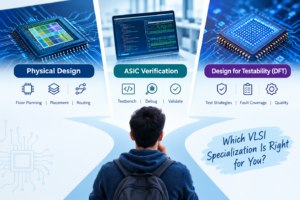
To new graduates, VLSI also provides organized career access points, which are skill-oriented and not experience-based. If you have the right background, you can find VLSI jobs for freshers in the fields of RTL design, ASIC verification, DFT, and layout engineering.
However, VLSI needs specific preparation rather than generic IT positions. In this case, VLSI training and career alignment are important. Industry-related training assists in bridging the gap between theoretical knowledge and practical semiconductor processes, enhancing the employability and confidence of novices venturing into a VLSI engineering career.
How Structured Training Supports Career Longevity
The achievement of the VLSI process relies on constant upskilling. Professionals who have invested in structured learning have a polished transition and steady VLSI career development. High-quality VLSI training and career programs focus on practical experience, real-world design challenges, and evolving industry standards.
This type of training makes the engineers up-to-date in technology nodes and design processes, making a future career in VLSI not only sustainable but also satisfying. Such a strategy also improves the accessibility of VLSI career opportunities, both in global and Indian markets.
Conclusion: Building a Stable VLSI Career with the Right Guidance
With the growth of industries increasingly reliant on hardware, VLSI remains one of the engineering disciplines to consider as the engineering discipline of the future. Its high demand globally, strong technical applicability, and growth of the VLSI career in India make it one of the safest career alternatives in the upcoming decade.
An organization like Takshila VLSI can contribute significantly to this path through VLSI training, career path mapping and match-ups with actual industry requirements. Through formal education, professional exposure and career orientation, engineers are assured of long-term success in the continuously expanding world of VLSI.