The electronics and semiconductor sector itself are great career choices, knowing which path is appropriate to choose is very important. A question many aspirants ask is, what would be the best path for the first job, “VLSI course or self learning.” The real VLSI course has its advantages, like exposure to practicals, expert mentor, tools required, interview preparation and placement assistance.
Understanding VLSI Self-Learning
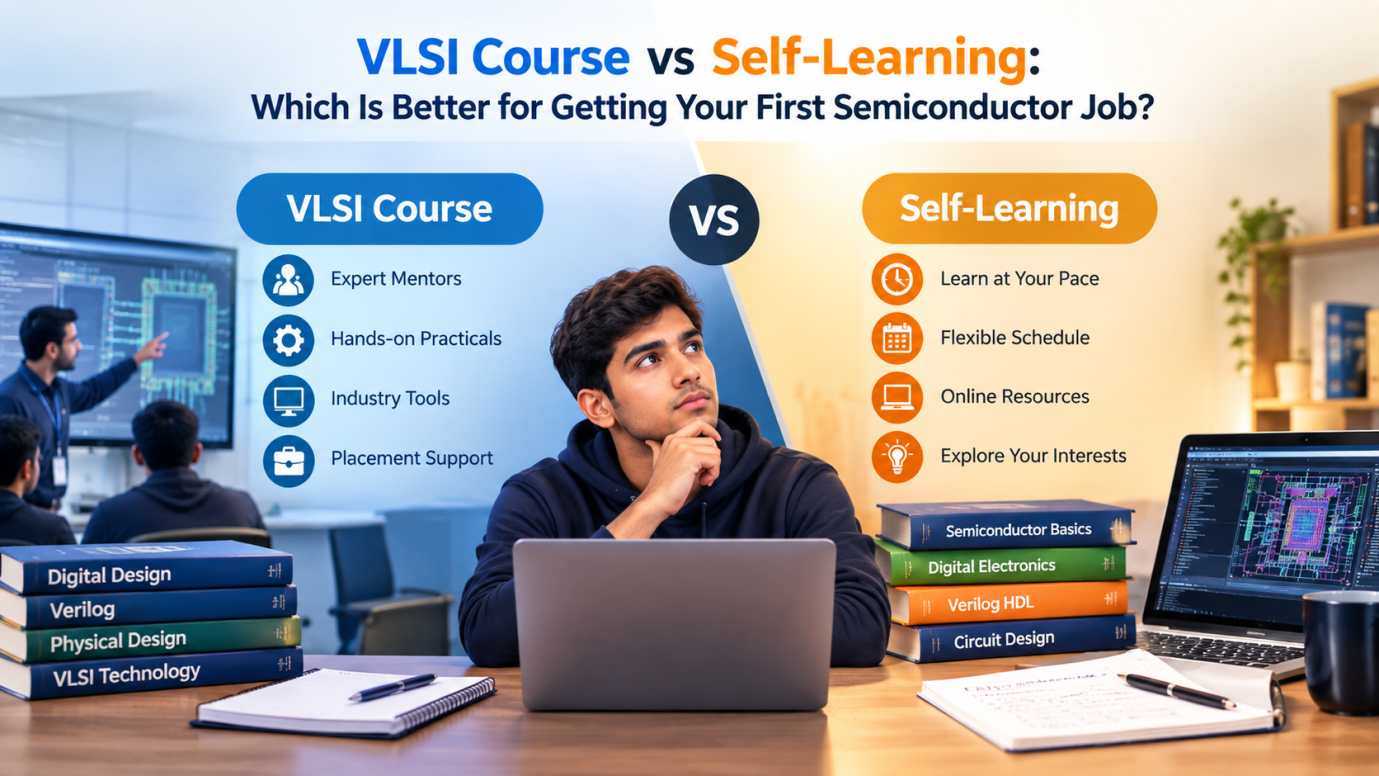
Students have the flexibility to use VLSI self learning, where students can learn at their own pace with use of online tutorials, technical articles, videos, books, and so on. This is effective for knowledge about elementary topics like: digital electronics, semiconductor basics, Verilog, circuit design and VLSI architecture.
The greatest benefit in my opinion is flexibility – learners can select subjects that interest them, and can dedicate more time to topics they find most difficult. But learning independently may fail, when learning is only needed by an experience, projects, or knowing the most used methods in industry. Without an experienced coach students may find out what is most needed in industry.
Learn VLSI Online vs Training
The choice between learning VLSI online vs training completely depends on your career aims, prior knowledge and your individual learning style. Online training could possibly be useful in a situation where you have the fundamentals of VLSI and have enough discipline to pursue studies according to the pre-defined schedule.
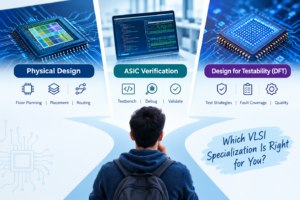
On the other hand, professional training includes systematic lessons covering VLSI concepts. You get to acquire knowledge about different subfields like Physical Design, ASIC Verification, Analog Layout Design, DFT, Analog Circuit Design and RTL Coding and FPGA design. A trained candidate is even offered access to complex EDA tools and gets to experience practical lab sessions.
Why Choose a VLSI Course for Jobs?
The need of VLSI courses for jobs has increased as companies no longer hire only for theoretically strong students. Candidates who have practical working knowledge with devices and softwares, are problem solvers, and understand the actual flow of designing are preferred at semiconductor companies.
The course pattern being adopted at Takshila VLSI is practical intensive where in labs, mini projects and final projects take up 70% of course time whereas the remaining part takes care of providing knowledge on technology, mock interview/ test support and study materials are also provided.
VLSI Training for Freshers
Graduates wondering about learning VLSI, and starting there. VLSI training for freshers is best suited for students who lack any industry experience.
The training programs are structured at Takshila such that the freshers learn not only a hands-on approach but also acquire knowledge from veteran industry practitioners. Online, offline and weekend batches are offered depending upon the niche.
VLSI Career Preparation: What Matters Most?
So an excellent VLSI career preparation needs to be a combination of a learning and a working experience. It should not only provide the candidate with the basic design process knowledge, but also hands on experience with the tools as well as work on projects in order to be a success in a technical interview.
What is the best way to learn VLSI? The strongest possible learning experience for beginners can be a combination of a well laid-out course and self study. While class material can complement individual learning, a professionally run course adds direction, expertise and familiarity with tools and technologies.
Conclusion
Looking at VLSI courses vs self-study, structured training might be extremely beneficial for candidates striving to land their first semiconductor position. With job-oriented programs, instruction by skilled professionals, round-the-clock tool accessibility, real-life work on projects, mock interviews and job placement help provided by the faculty of Takshila VLSI– with courses designed for freshers and experienced professionals as well as with online options, Takshila prepares the trainees to meet with industry demands and excel in the desired domain.