





Chip design is one of the most complex engineering activities humans undertake. A modern processor can contain tens of billions of transistors, and the tools that design it generate more

For decades, chip design followed a fairly steady rhythm: smaller transistors, higher clock speeds, and a new generation of processors every couple of years. The rise of artificial intelligence has
A VLSI interview is rarely a quiz on definitions. Interviewers want to see how you think. They will start with a simple question, follow your answer with “why?”, and keep

Recruiters in the semiconductor industry see hundreds of resumes that list the same subjects and the same marks. What makes one stand out is a project the candidate can explain
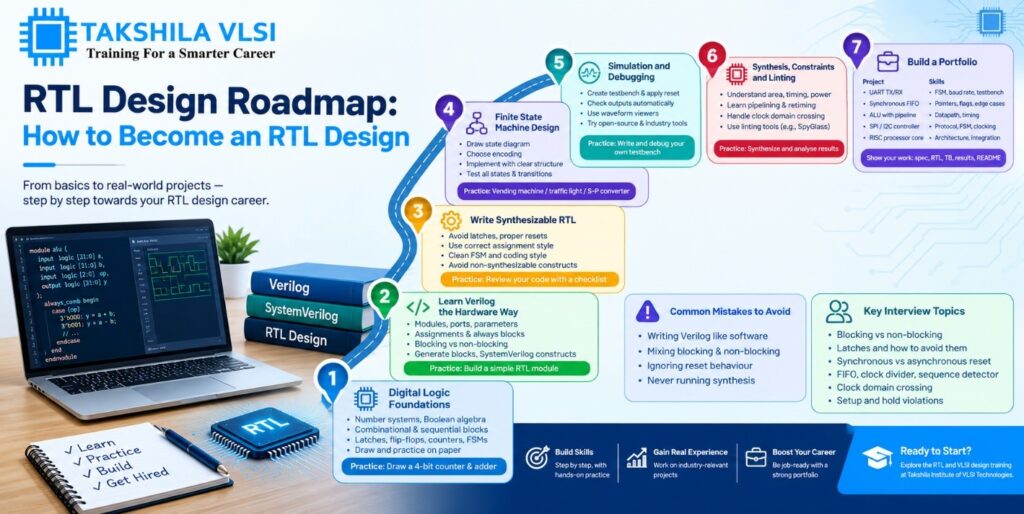
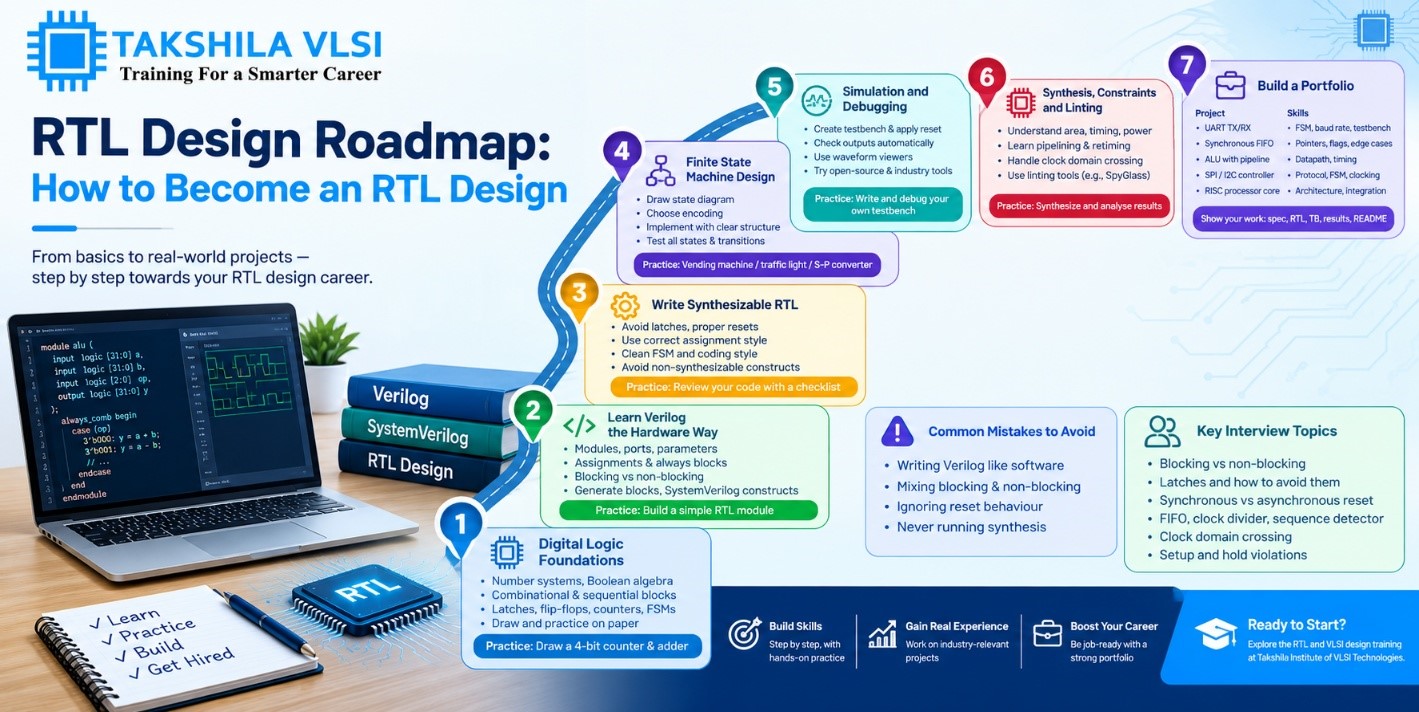
Every chip begins as a description of behaviour, and the person who writes that description is the RTL design engineer. RTL, short for Register Transfer Level, is where an idea
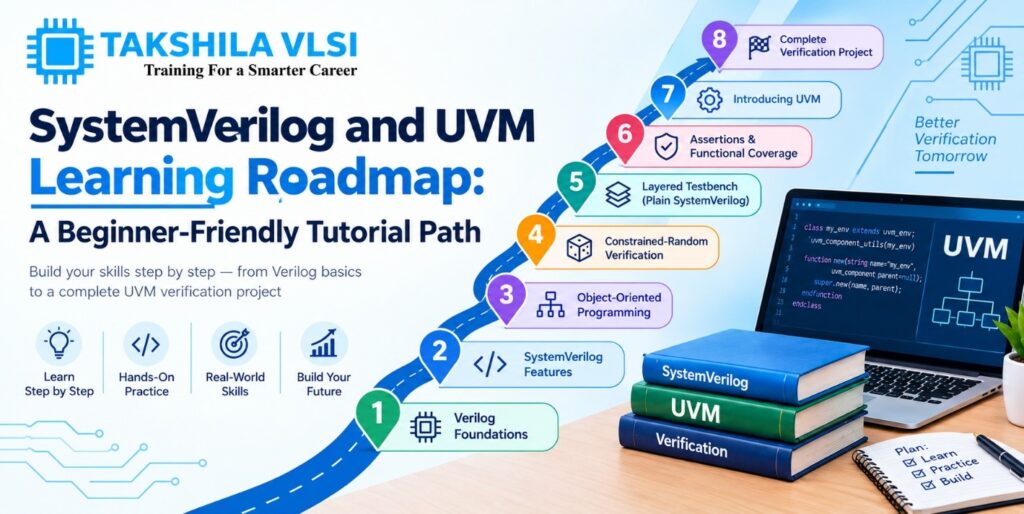
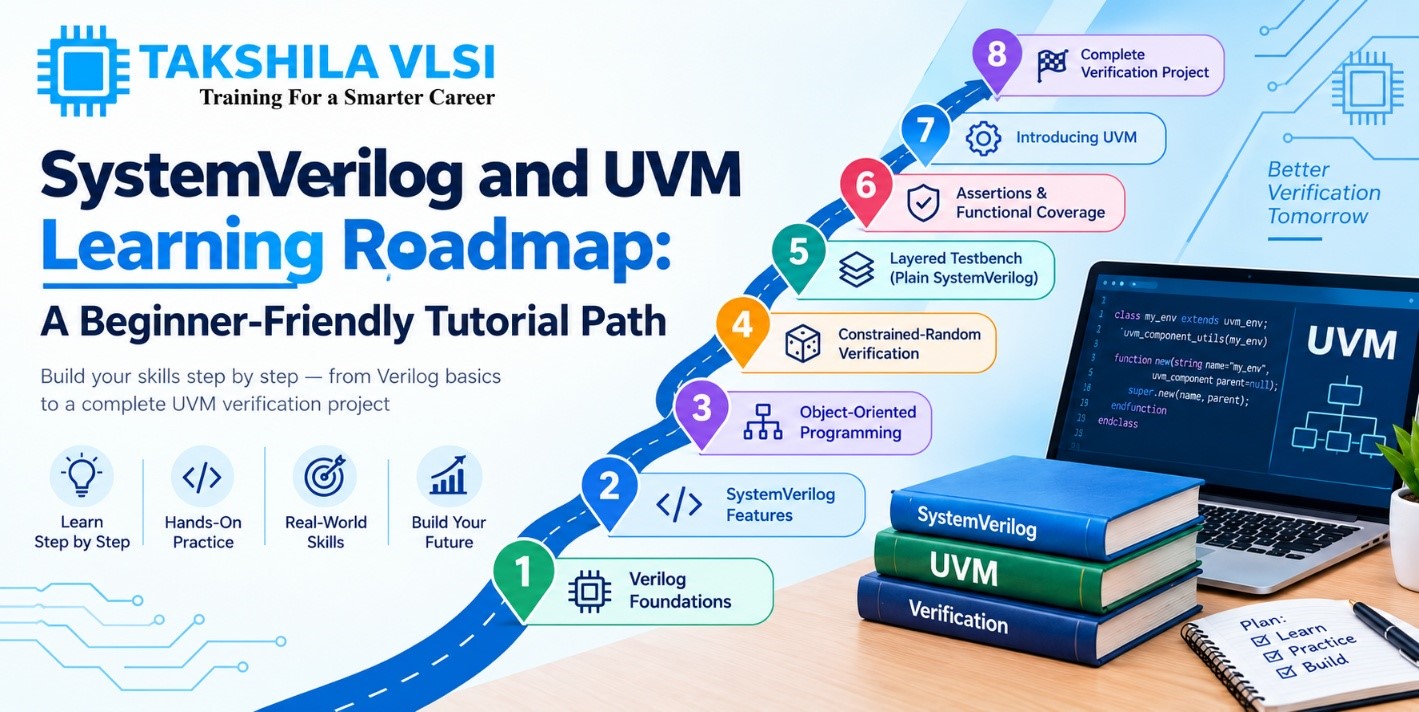
Search for a UVM tutorial and you will find hundreds of them, most starting with a class diagram that looks like a family tree. It is easy to feel lost

You finished your ECE degree, you know you want to work in semiconductors, and now you face a question that stops many freshers: which VLSI course should you pick? Physical
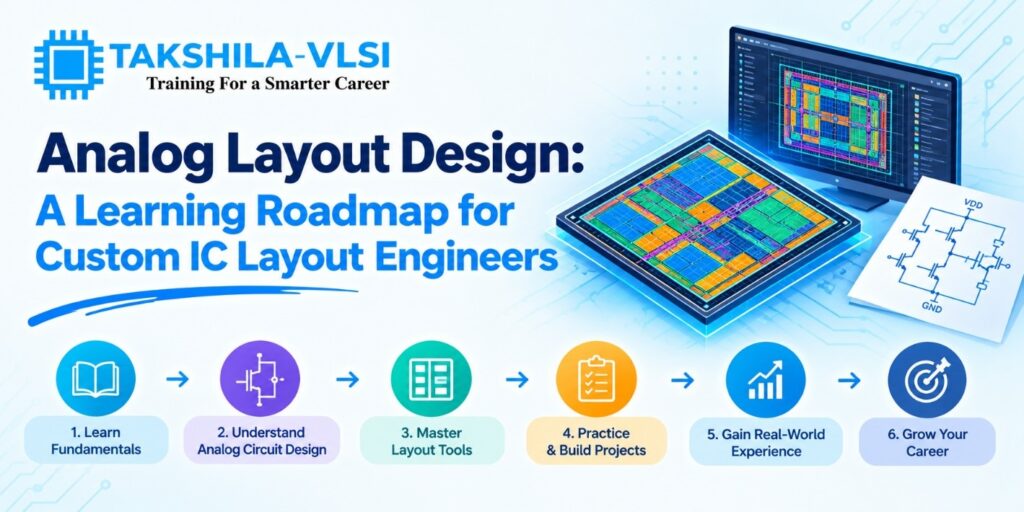
Digital chips are mostly laid out by tools. Analog chips are not. The amplifier that cleans up a sensor signal, the regulator that powers a phone and the data converter
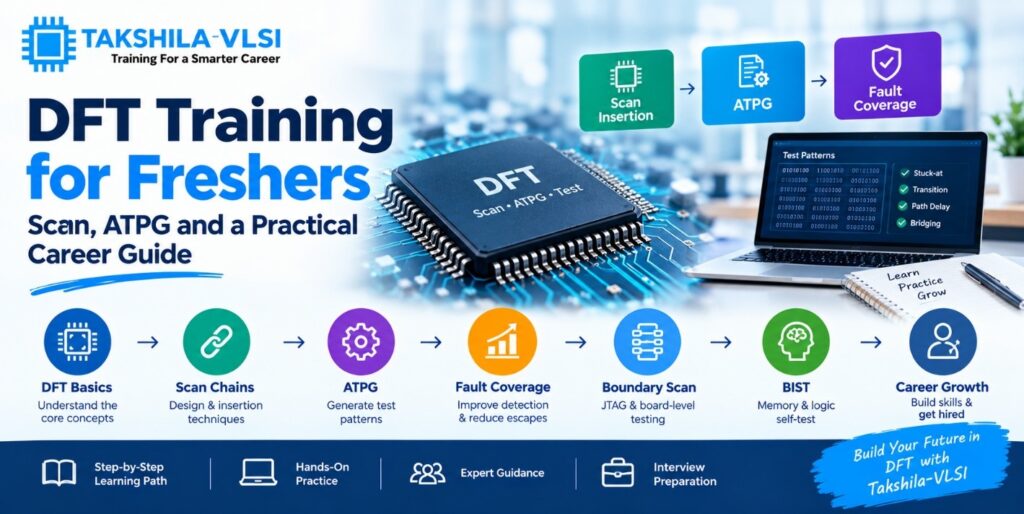
Every chip that leaves a factory must be tested, and testing a chip with billions of transistors is not as simple as switching it on. Without help built into the
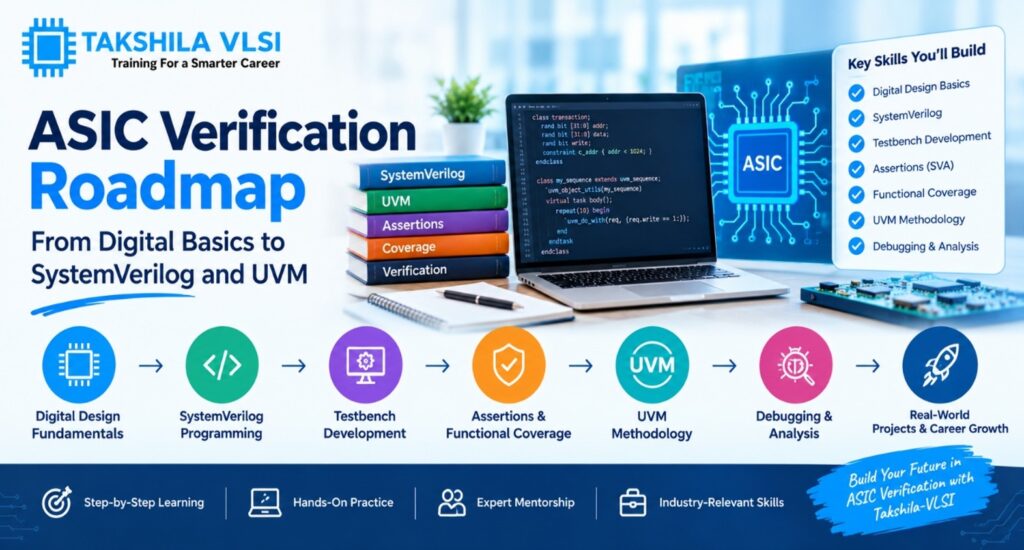
Here is a fact that surprises many newcomers: on a typical chip project, verification engineers often outnumber the designers. Finding bugs before silicon is manufactured is expensive work, because a